Buy wetzlar.eu ?
We are moving the project
wetzlar.eu .
Are you interested in purchasing the domain
wetzlar.eu ?
domain@kv-gmbh.de · 0541-91531010
Buy wetzlar.eu ?
Does every Cannondale brake disc fit every brake?
No, not every Cannondale brake disc will fit every brake. Different brakes have different specifications for the size and mounting of the brake disc. It is important to ensure that the brake disc you are purchasing is compatible with the specific model and type of brake you have. Always check the manufacturer's specifications and recommendations to ensure a proper fit and safe operation. **
What is a disc brake?
A disc brake is a type of braking system used in vehicles, bicycles, and other machinery. It consists of a metal disc (rotor) attached to the wheel, and a caliper that holds brake pads. When the brake pedal is pressed, the caliper squeezes the brake pads against the rotor, creating friction and slowing down the vehicle. Disc brakes are known for their superior stopping power and heat dissipation compared to other types of brakes, making them a popular choice for high-performance vehicles and heavy-duty applications. **
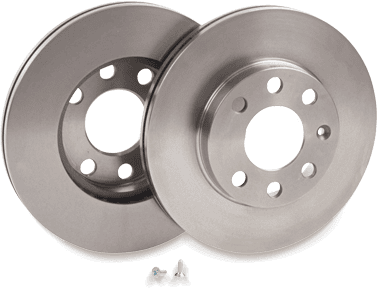
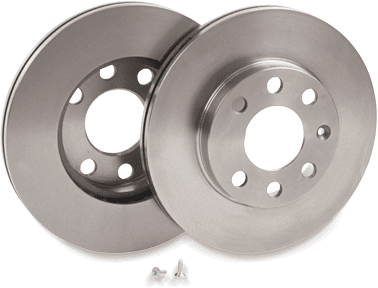
Similar search terms for BERAL-BCR259A-Brake-disc
Top-Angebote
Products related to BERAL-BCR259A-Brake-disc:
-
BERAL BCR338A Brake discBrake Disc Type: Vented; Outer Diameter [mm]: 330; Brake Disc Thickness: 32; Height: 129,5; Centering Diameter [mm]: 185; Number of Holes: 6; Weight [kg]: 17,9; Minimum thickness [mm]: 29; Packaging length [cm]: 35,5; Packaging width [cm]: 35,5; Packaging height [cm]: 15; Drilled: no; Fitting Position: Front Axle; Construction Year from: 10/2007173,98 £*Shipping: 8,45 £Secure redirect to the provider
-
BERAL FAI113 Brake pad wear sensorNumber of wear indicators [per axle]: 2; Length [mm]: 495; only for article number: BCV29067T, BCV29122T; Connector Shape: oval; Weight [kg]: 0,036; Packaging length [cm]: 12; Packaging width [cm]: 4; Packaging height [cm]: 2; Fitting Position: Front Axle, Rear Axle; Brake Type: Disc Brake; Construction Year from: 01/199713,49 £*Shipping: 8,45 £Secure redirect to the provider
-
BERAL FAI176 Brake pad wear sensorBrake System: Meritor/Brembo; Number of wear indicators [per axle]: 2; Length [mm]: 138; only for article number: BCV29067T, BCV29122T; Connector Shape: oval; Weight [kg]: 0,025; Packaging length [cm]: 10; Packaging width [cm]: 6; Packaging height [cm]: 1,6; Fitting Position: Front Axle, Rear Axle; Brake Type: Disc Brake; Construction Year from: 01/199712,99 £*Shipping: 8,45 £Secure redirect to the provider
-
BERAL FAI163 Brake pad wear sensorNumber of wear indicators [per axle]: 2; Length [mm]: 355; only for article number: BCV29131TK; Connector Shape: angular; Weight [kg]: 0,075; Packaging length [cm]: 18,5; Packaging width [cm]: 4; Packaging height [cm]: 2,5; Fitting Position: Front Axle, Rear Axle; Brake Type: Disc Brake; Construction Year from: 08/2000, 01/2001, 06/200038,99 £*Shipping: 8,45 £Secure redirect to the provider


-
What is the difference between a hydraulic disc brake and a mechanical disc brake?
The main difference between a hydraulic disc brake and a mechanical disc brake is the way they transmit force from the brake lever to the caliper. Hydraulic disc brakes use fluid to transmit force, while mechanical disc brakes use a cable. This means that hydraulic disc brakes generally provide more precise and powerful braking, as well as better modulation and less maintenance. On the other hand, mechanical disc brakes are simpler and easier to adjust, making them a popular choice for entry-level or budget-conscious riders. **
-
Is the rear wheel with disc brake identical to the front wheel with disc brake?
No, the rear wheel with disc brake is not identical to the front wheel with disc brake. While both wheels have disc brakes, they are designed differently to accommodate the specific needs of the front and rear of the bike. The front wheel typically has a larger disc rotor to provide more stopping power, while the rear wheel may have a smaller disc rotor to balance braking performance with weight distribution. Additionally, the mounting and positioning of the disc brake caliper may differ between the front and rear wheels. **
-
What does the brake disc do?
The brake disc is a key component of the braking system in a vehicle. When the brake pedal is pressed, the brake disc is clamped by the brake caliper, causing friction between the disc and the brake pads. This friction slows down the rotation of the wheel, ultimately bringing the vehicle to a stop. The brake disc dissipates the heat generated from this friction, allowing for consistent and reliable braking performance. **
-
Is the brake disc worn out?
To determine if the brake disc is worn out, you can visually inspect it for any signs of damage or wear. Look for deep grooves, scoring, or uneven wear on the surface of the disc. Additionally, listen for any unusual noises when applying the brakes, such as grinding or squealing, which could indicate a worn-out brake disc. If you notice any of these signs, it is likely that the brake disc is worn out and should be replaced. **
Is this brake disc still good?
Without being able to physically inspect the brake disc, it is difficult to determine its condition. However, some signs of a worn or damaged brake disc include deep grooves, cracks, or an uneven surface. If the disc appears smooth and free of significant damage, it may still be in good condition. It is important to have a professional mechanic inspect the brake disc to ensure it is safe for use. **
Why is the disc brake scratching?
The disc brake may be scratching due to several reasons. One common reason is that the brake pads may be worn out and need to be replaced. Another reason could be that the brake caliper is not properly aligned, causing it to rub against the disc. Additionally, dirt and debris may have built up on the disc, causing the scratching sound. It is important to have the disc brake system inspected and serviced by a professional to determine the exact cause of the scratching and to ensure safe and effective braking. **
Top-Angebote
Products related to BERAL-BCR259A-Brake-disc:
-
BERAL BCR259A Brake discBrake Disc Type: Vented; Outer Diameter [mm]: 433; Brake Disc Thickness: 45; Brake System: MER D-DUCO; Additionally required article (article number): FAC162; Height: 45; Number of Holes: 0; Packaging length [cm]: 44; Packaging width [cm]: 44; Packaging height [cm]: 5; Drilled: no; Fitting Position: Front Axle, Rear Axle197,98 £*Shipping: 8,45 £Secure redirect to the provider
-
BERAL BCR139A Brake discBrake Disc Type: solid; Outer Diameter [mm]: 290; Brake Disc Thickness: 22; Brake System: BREMBO; Supplementary Article / Supplementary Info Info 2: with wheel studs; Height: 111; Centering Diameter [mm]: 68; Number of Holes: 6; Weight [kg]: 15; Minimum thickness [mm]: 19; Bolt Hole Circle Ø 1 [mm]: 95; Bolt Hole Circle Ø 2 [mm]: 170; Packaging length [cm]: 29; Packaging width [cm]: 29; Packaging height [cm]: 15; Drilled: no; Fitting Position: Front Axle; Construction Year from: 05/1996, 01/1996, 06/1996; Vehicle Identification Number (VIN) to: 5484644, D239462, 5494381, D267329105,98 £*Shipping: 8,45 £Secure redirect to the provider
-
BERAL BCR338A Brake discBrake Disc Type: Vented; Outer Diameter [mm]: 330; Brake Disc Thickness: 32; Height: 129,5; Centering Diameter [mm]: 185; Number of Holes: 6; Weight [kg]: 17,9; Minimum thickness [mm]: 29; Packaging length [cm]: 35,5; Packaging width [cm]: 35,5; Packaging height [cm]: 15; Drilled: no; Fitting Position: Front Axle; Construction Year from: 10/2007173,98 £*Shipping: 8,45 £Secure redirect to the provider
-
BERAL FAI113 Brake pad wear sensorNumber of wear indicators [per axle]: 2; Length [mm]: 495; only for article number: BCV29067T, BCV29122T; Connector Shape: oval; Weight [kg]: 0,036; Packaging length [cm]: 12; Packaging width [cm]: 4; Packaging height [cm]: 2; Fitting Position: Front Axle, Rear Axle; Brake Type: Disc Brake; Construction Year from: 01/199713,49 £*Shipping: 8,45 £Secure redirect to the provider
-
Does every Cannondale brake disc fit every brake?
No, not every Cannondale brake disc will fit every brake. Different brakes have different specifications for the size and mounting of the brake disc. It is important to ensure that the brake disc you are purchasing is compatible with the specific model and type of brake you have. Always check the manufacturer's specifications and recommendations to ensure a proper fit and safe operation. **
-
What is a disc brake?
A disc brake is a type of braking system used in vehicles, bicycles, and other machinery. It consists of a metal disc (rotor) attached to the wheel, and a caliper that holds brake pads. When the brake pedal is pressed, the caliper squeezes the brake pads against the rotor, creating friction and slowing down the vehicle. Disc brakes are known for their superior stopping power and heat dissipation compared to other types of brakes, making them a popular choice for high-performance vehicles and heavy-duty applications. **
-
What is the difference between a hydraulic disc brake and a mechanical disc brake?
The main difference between a hydraulic disc brake and a mechanical disc brake is the way they transmit force from the brake lever to the caliper. Hydraulic disc brakes use fluid to transmit force, while mechanical disc brakes use a cable. This means that hydraulic disc brakes generally provide more precise and powerful braking, as well as better modulation and less maintenance. On the other hand, mechanical disc brakes are simpler and easier to adjust, making them a popular choice for entry-level or budget-conscious riders. **
-
Is the rear wheel with disc brake identical to the front wheel with disc brake?
No, the rear wheel with disc brake is not identical to the front wheel with disc brake. While both wheels have disc brakes, they are designed differently to accommodate the specific needs of the front and rear of the bike. The front wheel typically has a larger disc rotor to provide more stopping power, while the rear wheel may have a smaller disc rotor to balance braking performance with weight distribution. Additionally, the mounting and positioning of the disc brake caliper may differ between the front and rear wheels. **
Similar search terms for BERAL-BCR259A-Brake-disc
-
BERAL FAI176 Brake pad wear sensorBrake System: Meritor/Brembo; Number of wear indicators [per axle]: 2; Length [mm]: 138; only for article number: BCV29067T, BCV29122T; Connector Shape: oval; Weight [kg]: 0,025; Packaging length [cm]: 10; Packaging width [cm]: 6; Packaging height [cm]: 1,6; Fitting Position: Front Axle, Rear Axle; Brake Type: Disc Brake; Construction Year from: 01/199712,99 £*Shipping: 8,45 £Secure redirect to the provider
-
BERAL FAI163 Brake pad wear sensorNumber of wear indicators [per axle]: 2; Length [mm]: 355; only for article number: BCV29131TK; Connector Shape: angular; Weight [kg]: 0,075; Packaging length [cm]: 18,5; Packaging width [cm]: 4; Packaging height [cm]: 2,5; Fitting Position: Front Axle, Rear Axle; Brake Type: Disc Brake; Construction Year from: 08/2000, 01/2001, 06/200038,99 £*Shipping: 8,45 £Secure redirect to the provider
-
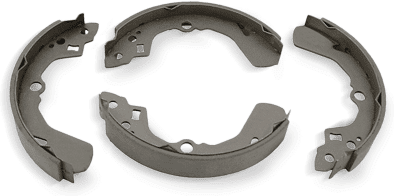
BERAL KBL19506.3-1561 Brake Lining Kit, drum brakeQuality: 1561; Thickness: 15,4; Test Mark: E9-90R-02B1058/3872; Width [mm]: 160; Weight [kg]: 5,3; Radius [mm]: 176; Drum diameter [mm]: 364; Rivet Type: 8x15; Rivet quantity per lining kit: 56; Hole Arrangement/Number: 8; Wear Warning Contact: prepared for wear warning indicator; Brake Lining: Standard Size, with crescent lining; Outer Length [mm]: 142, 187; Inner length [mm]: 131, 172; Fitting Position: Front Axle, Rear Axle; Construction Year from: 10/1988154,99 £*Shipping: 1,99 £Secure redirect to the provider
-
BERAL KBL19490.9-1561 Brake Lining Kit, drum brakeQuality: 1561; Thickness: 20,1; Width [mm]: 200; Weight [kg]: 9; Radius [mm]: 179; Drum diameter [mm]: 367; Rivet Type: 8x15; Rivet quantity per lining kit: 64; Hole Arrangement/Number: 8; Brake Lining: with crescent lining, 1st Undersize; Outer Length [mm]: 186, 189; Inner length [mm]: 167, 169140,99 £*Shipping: 1,99 £Secure redirect to the provider
-
What does the brake disc do?
The brake disc is a key component of the braking system in a vehicle. When the brake pedal is pressed, the brake disc is clamped by the brake caliper, causing friction between the disc and the brake pads. This friction slows down the rotation of the wheel, ultimately bringing the vehicle to a stop. The brake disc dissipates the heat generated from this friction, allowing for consistent and reliable braking performance. **
-
Is the brake disc worn out?
To determine if the brake disc is worn out, you can visually inspect it for any signs of damage or wear. Look for deep grooves, scoring, or uneven wear on the surface of the disc. Additionally, listen for any unusual noises when applying the brakes, such as grinding or squealing, which could indicate a worn-out brake disc. If you notice any of these signs, it is likely that the brake disc is worn out and should be replaced. **
-
Is this brake disc still good?
Without being able to physically inspect the brake disc, it is difficult to determine its condition. However, some signs of a worn or damaged brake disc include deep grooves, cracks, or an uneven surface. If the disc appears smooth and free of significant damage, it may still be in good condition. It is important to have a professional mechanic inspect the brake disc to ensure it is safe for use. **
-
Why is the disc brake scratching?
The disc brake may be scratching due to several reasons. One common reason is that the brake pads may be worn out and need to be replaced. Another reason could be that the brake caliper is not properly aligned, causing it to rub against the disc. Additionally, dirt and debris may have built up on the disc, causing the scratching sound. It is important to have the disc brake system inspected and serviced by a professional to determine the exact cause of the scratching and to ensure safe and effective braking. **
* All prices are inclusive of VAT and, if applicable, plus shipping costs. The offer information is based on the details provided by the respective shop and is updated through automated processes. Real-time updates do not occur, so deviations can occur in individual cases. ** Note: Parts of this content were created by AI.