Buy wetzlar.eu ?
We are moving the project
wetzlar.eu .
Are you interested in purchasing the domain
wetzlar.eu ?
domain@kv-gmbh.de · 0541-91531010
Buy wetzlar.eu ?
What are the factors of attraction in tourism?
The factors of attraction in tourism can include natural beauty such as beaches, mountains, and wildlife, as well as cultural attractions like historical sites, museums, and local traditions. Additionally, activities such as adventure sports, shopping, and culinary experiences can also be major draws for tourists. The availability of accommodations, transportation, and infrastructure also play a significant role in attracting tourists to a destination. Finally, safety, political stability, and the overall reputation of a location can influence a tourist's decision to visit. **
What factors shaped the history of the Crusades?
The history of the Crusades was shaped by a combination of religious, political, and economic factors. The religious motivation was a key factor, as the Crusades were a series of religious wars initiated by the Latin Church in the medieval period. Political factors, such as the desire for power and control over the Holy Land, also played a significant role in shaping the Crusades. Additionally, economic factors, including the desire for trade routes and access to valuable resources, influenced the course of the Crusades. These factors combined to create a complex and multifaceted history of the Crusades. **


Similar search terms for Factors
Top-Angebote
Products related to Factors:
-
From the Archives: Black History and Culture Value PackThis brand-new series is rooted in a profound commitment to shedding light on some of the important -- and often lesser-known -- aspects of Black history. From the Archives features landmarks, events, people, and artistic endeavors that have played...26,99 $*Shipping: 0,00 $Secure redirect to the provider
-
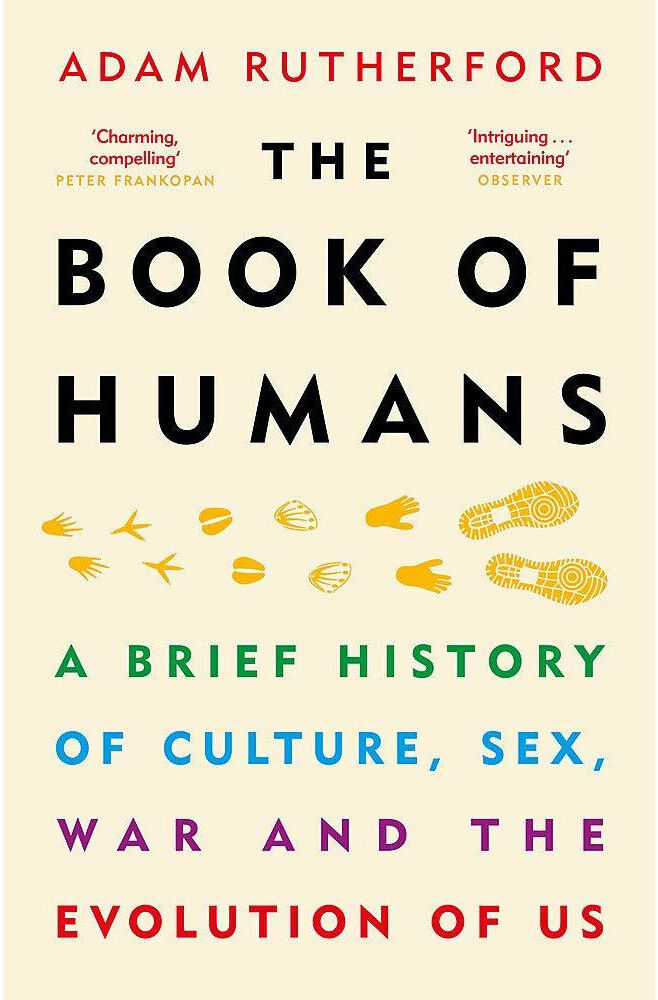
Orion The Book of Humans by Adam Rutherford – A Brief History of Culture, Sex, War & EvolutionWHAT MAKES US HUMAN? Waging war? Sex for pleasure? Creating art? Mastery of fire? In this thrilling tour of the animal kingdom, Adam Rutherford tells the story of how we became the unique creatures we are today. Illuminated by the latest scientific discoveries, THE BOOK OF HUMANS is a dazzling compendium of what unequivocally fixes us as animals, and reveals how we are extraordinary among them.4,98 £*Shipping: 1,99 £Secure redirect to the provider
-
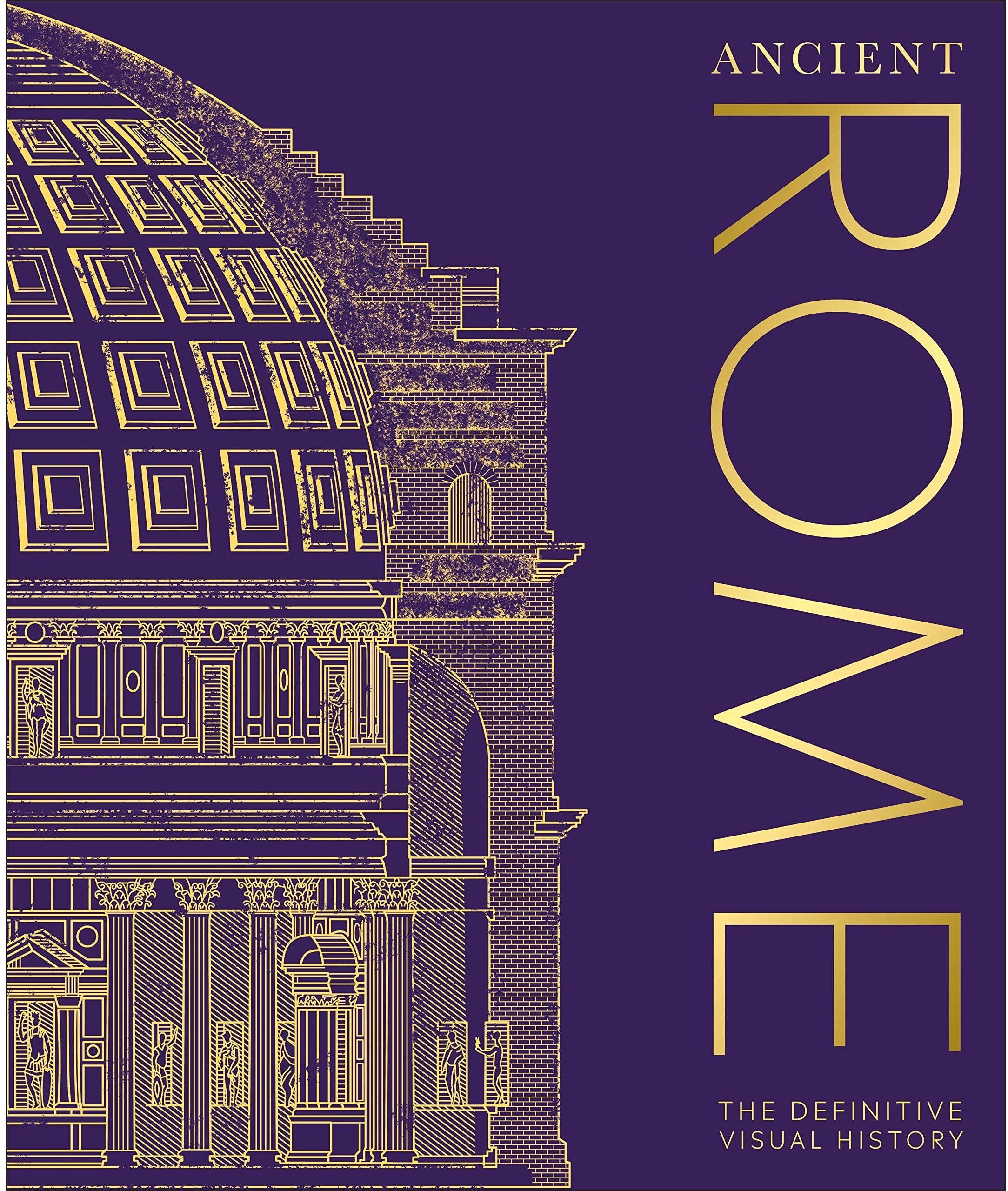
Ancient Rome: The Definitive Visual History (DK Classic History)Immerse yourself in the history of ancient Rome - from its origins as a small settlement on the Palatine Hill to its peak as an empire reigning over 90 million people, and its tumultuous decline. Covering more than 1,000 years of history, and an empire that stretched from Scotland to Syria, Ancient Rome reveals in vivid detail all of the key political, cultural, and military events that shaped the Roman Empire and explores what it was like to live in a society that laid the foundations for many aspects of the modern world. Sumptuous photography and engaging text cover every facet of life in ancient Rome, from art, entertainment, and fashion to engineering, medicine, and war, while detailed maps trace the rise of the mighty Roman Empire. Step back in time in the pages of this history book to discover:- Themed spreads explore developments in areas such as sculpture, religion, warfare, and engineering. - Includes tales of the most dramatic events and battles in Roman history, as well as profiles of influential historical and cultural figures. - An optional 80pp reference section includes sections on rulers, gods and goddesses, and key sites. Featuring Rome's greatest emperors, from Augustus to Constantine, as well as profiles of generals, historians, and influential women, Ancient Rome also delves into the fascinating stories of gladiators, bakers, and enslaved people. The most iconic buildings of Rome are brought to life with specially commissioned CGI recreations, while the stories of ordinary citizens, soldiers, and persecuted groups from across the empire are told with the help of illustrations, artefacts, and eyewitness accounts. Beautifully illustrated and unparalleled in scope, Ancient Rome is the perfect book for anyone who is interested in this defining period of world history.19,95 £*Shipping: 2,99 £Secure redirect to the provider
-
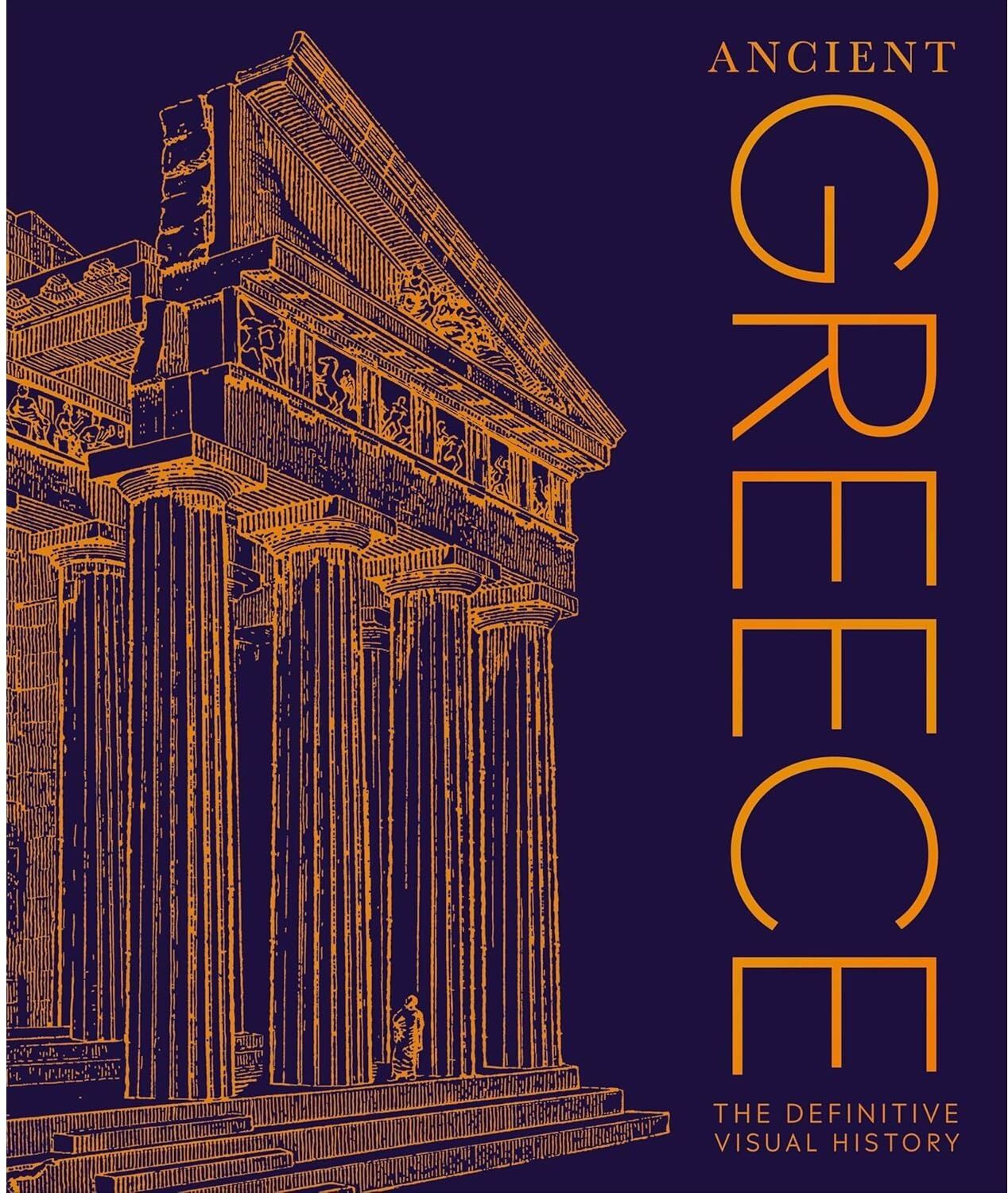
Ancient Greece: The Definitive Visual History (DK Classic History)Embark upon a fascinating journey through ancient Greece – from its rise and fall to its lasting legacy throughout the Western world. Spanning more than 3,000 years, Ancient Greece explores the tumultuous history of this glorious empire in vivid detail – from its Minoan and Mycenaean origins to the apogee of the warring city-states of Athens and Sparta, and from the death of its most charismatic leader, Alexander the Great, to its ultimate defeat by Rome. Sumptuous photography and authoritative, engaging text cover every facet of life in ancient Greece, from art, entertainment, and schools of thought to politics, medicine, and war, while the myths and religious beliefs of the ancient culture are explored and explained in depth. Greece’s military and political power shines through in fascinating maps of its legendary battles. Buried palaces and the Athenian Agora where Plato and Socrates discussed philosophy are brought back to life with stunning CGI artworks. And the stories of everyone from ordinary citizens to lawmakers and the first Olympic athletes are retold through eyewitness accounts and original artefacts.19,99 £*Shipping: 2,99 £Secure redirect to the provider

-
What do push factors and pull factors mean?
Push factors are circumstances that force individuals to leave their current location, such as poverty, political instability, or lack of job opportunities. Pull factors, on the other hand, are conditions that attract individuals to a new location, such as better job prospects, higher quality of life, or political stability. Both push and pull factors play a significant role in influencing migration patterns and decisions. **
-
To which factors do biotic and abiotic factors belong?
Biotic factors belong to living organisms such as plants, animals, fungi, and bacteria, while abiotic factors belong to non-living elements such as temperature, water, sunlight, soil, and air. Both biotic and abiotic factors play crucial roles in shaping ecosystems and influencing the distribution and abundance of species within those ecosystems. They interact with each other to create complex and dynamic environments. **
-
What is the difference between density-independent factors and abiotic factors?
Density-independent factors are environmental factors that affect a population regardless of its size or density, such as natural disasters or climate change. Abiotic factors, on the other hand, are non-living components of an ecosystem that can influence the survival and growth of organisms, such as temperature, sunlight, and soil composition. While density-independent factors can include abiotic factors, abiotic factors encompass a broader range of non-living elements that can impact an ecosystem. **
-
What are original factors of production and derivative factors of production?
Original factors of production are the primary inputs required for the production process, including land, labor, capital, and entrepreneurship. These factors are essential for creating goods and services. Derivative factors of production are resources that are created or derived from the original factors, such as technology, knowledge, and skills. These derivative factors enhance the productivity and efficiency of the original factors in the production process. **

What factors stop growth?
Several factors can stop growth, including lack of access to resources such as education, healthcare, and economic opportunities. Inadequate nutrition and poor living conditions can also hinder physical growth and development. Additionally, environmental factors such as pollution and climate change can have negative effects on growth. Finally, social and political factors such as discrimination, conflict, and instability can create barriers to growth and development. **
What are linear factors?
Linear factors are expressions of the form (x - a), where "a" is a constant. They represent the factors of a polynomial that are of degree 1, meaning they are linear in nature. When a polynomial is factored into linear factors, it can help us understand the roots or zeros of the polynomial, which are the values of x that make the polynomial equal to zero. Linear factors play a crucial role in understanding the behavior and properties of polynomials. **
Top-Angebote
Products related to Factors:
-
Revuele Glowify Grow Younger Power Serum Growth Factors firming facial serum 30 mlRevuele Glowify Grow Younger Power Serum Growth Factors, 30 ml, Skin Serums for Women, Does it feel as though your skin needs something more than just the care provided by a cream? The Revuele Glowify Grow Younger Power Serum Growth Factors facial serum is the perfect product to enrich your skincare routine – it pampers the skin and delivers an intensive treatment. With its high concentration of active ingredients, the effect it has on your skin is far more pronounced and faster than with a face cream. Its liquid consistency makes application easier, as it is absorbed into the skin very well. Characteristics: helps to smooth out wrinkles and fine lines firms the facial contours restores freshness and youthful beauty to your skin helps remove signs of skin ageing smoothes out uneven skin texture promotes collagen production Ingredients: vegan product hyaluronic acid – binds large quantities of water and hydrates intensively collagen – binds a large amount of water, keeping skin hydrated for a long time, and thus promotes a youthful, full and elastic appearance of skin and a reduction in the visibility of wrinkles panthenol – has a hydrating and soothing effect, relieves irritation, redness, dryness and discomfort How to use: Dab an appropriate amount of the serum gently into clean skin with your fingertips. Continue with your favourite day/night care products.3,60 £*Shipping: 3,99 £Secure redirect to the provider
-
Macmillan Business How Big Things Get Done: The Surprising Factors Behind Every Successful Project, from Home Renovations to Space ExplorationHow Big Things Get Done: The Surprising Factors Behind Every Successful Project, from Home Renovations to Space Exploration Nothing is more inspiring than a big vision that becomes a triumphant new reality. Think of how Apple’s iPod went from a project with a single employee to an enormously successful product launch in eleven months. But such successes are the exception. Consider how London’s Crossrail project delivered five years late and billions over budget. More modest endeavours, whether launching a small business, organizing a conference, or just finishing a work project on time, also commonly fail. Why? Understanding what distinguishes the triumphs from the failures has been the life’s work of Oxford professor Bent Flyvbjerg. In How Big Things Get Done, he identifies the errors that lead projects to fail, and the research-based principles that will make yours succeed: Understand your odds. If you don’t know them, you won’t win. Plan slow, act fast. Getting to the action quick feels right. But it’s wrong. Think right to left. Start with your goal, then identify the steps to get there. Find your Lego. Big is best built from small. Master the unknown unknowns. Most think they can’t, so they fail. Flyvbjerg shows how you can. Full of vivid examples ranging from the building of the Sydney Opera House to the making of the latest Pixar blockbusters, How Big Things Get Done reveals how to get any ambitious project done – on time and on budget.2,99 £*Shipping: 1,99 £Secure redirect to the provider
-
From the Archives: Black History and Culture Value PackThis brand-new series is rooted in a profound commitment to shedding light on some of the important -- and often lesser-known -- aspects of Black history. From the Archives features landmarks, events, people, and artistic endeavors that have played...26,99 $*Shipping: 0,00 $Secure redirect to the provider
-
Orion The Book of Humans by Adam Rutherford – A Brief History of Culture, Sex, War & EvolutionWHAT MAKES US HUMAN? Waging war? Sex for pleasure? Creating art? Mastery of fire? In this thrilling tour of the animal kingdom, Adam Rutherford tells the story of how we became the unique creatures we are today. Illuminated by the latest scientific discoveries, THE BOOK OF HUMANS is a dazzling compendium of what unequivocally fixes us as animals, and reveals how we are extraordinary among them.4,98 £*Shipping: 1,99 £Secure redirect to the provider
-
What are the factors of attraction in tourism?
The factors of attraction in tourism can include natural beauty such as beaches, mountains, and wildlife, as well as cultural attractions like historical sites, museums, and local traditions. Additionally, activities such as adventure sports, shopping, and culinary experiences can also be major draws for tourists. The availability of accommodations, transportation, and infrastructure also play a significant role in attracting tourists to a destination. Finally, safety, political stability, and the overall reputation of a location can influence a tourist's decision to visit. **
-
What factors shaped the history of the Crusades?
The history of the Crusades was shaped by a combination of religious, political, and economic factors. The religious motivation was a key factor, as the Crusades were a series of religious wars initiated by the Latin Church in the medieval period. Political factors, such as the desire for power and control over the Holy Land, also played a significant role in shaping the Crusades. Additionally, economic factors, including the desire for trade routes and access to valuable resources, influenced the course of the Crusades. These factors combined to create a complex and multifaceted history of the Crusades. **
-
What do push factors and pull factors mean?
Push factors are circumstances that force individuals to leave their current location, such as poverty, political instability, or lack of job opportunities. Pull factors, on the other hand, are conditions that attract individuals to a new location, such as better job prospects, higher quality of life, or political stability. Both push and pull factors play a significant role in influencing migration patterns and decisions. **
-
To which factors do biotic and abiotic factors belong?
Biotic factors belong to living organisms such as plants, animals, fungi, and bacteria, while abiotic factors belong to non-living elements such as temperature, water, sunlight, soil, and air. Both biotic and abiotic factors play crucial roles in shaping ecosystems and influencing the distribution and abundance of species within those ecosystems. They interact with each other to create complex and dynamic environments. **
Similar search terms for Factors
-
Ancient Rome: The Definitive Visual History (DK Classic History)Immerse yourself in the history of ancient Rome - from its origins as a small settlement on the Palatine Hill to its peak as an empire reigning over 90 million people, and its tumultuous decline. Covering more than 1,000 years of history, and an empire that stretched from Scotland to Syria, Ancient Rome reveals in vivid detail all of the key political, cultural, and military events that shaped the Roman Empire and explores what it was like to live in a society that laid the foundations for many aspects of the modern world. Sumptuous photography and engaging text cover every facet of life in ancient Rome, from art, entertainment, and fashion to engineering, medicine, and war, while detailed maps trace the rise of the mighty Roman Empire. Step back in time in the pages of this history book to discover:- Themed spreads explore developments in areas such as sculpture, religion, warfare, and engineering. - Includes tales of the most dramatic events and battles in Roman history, as well as profiles of influential historical and cultural figures. - An optional 80pp reference section includes sections on rulers, gods and goddesses, and key sites. Featuring Rome's greatest emperors, from Augustus to Constantine, as well as profiles of generals, historians, and influential women, Ancient Rome also delves into the fascinating stories of gladiators, bakers, and enslaved people. The most iconic buildings of Rome are brought to life with specially commissioned CGI recreations, while the stories of ordinary citizens, soldiers, and persecuted groups from across the empire are told with the help of illustrations, artefacts, and eyewitness accounts. Beautifully illustrated and unparalleled in scope, Ancient Rome is the perfect book for anyone who is interested in this defining period of world history.19,95 £*Shipping: 2,99 £Secure redirect to the provider
-
Ancient Greece: The Definitive Visual History (DK Classic History)Embark upon a fascinating journey through ancient Greece – from its rise and fall to its lasting legacy throughout the Western world. Spanning more than 3,000 years, Ancient Greece explores the tumultuous history of this glorious empire in vivid detail – from its Minoan and Mycenaean origins to the apogee of the warring city-states of Athens and Sparta, and from the death of its most charismatic leader, Alexander the Great, to its ultimate defeat by Rome. Sumptuous photography and authoritative, engaging text cover every facet of life in ancient Greece, from art, entertainment, and schools of thought to politics, medicine, and war, while the myths and religious beliefs of the ancient culture are explored and explained in depth. Greece’s military and political power shines through in fascinating maps of its legendary battles. Buried palaces and the Athenian Agora where Plato and Socrates discussed philosophy are brought back to life with stunning CGI artworks. And the stories of everyone from ordinary citizens to lawmakers and the first Olympic athletes are retold through eyewitness accounts and original artefacts.19,99 £*Shipping: 2,99 £Secure redirect to the provider
-
Titan Assassins Creed - The Complete Visual History: The Definitive Visual HistoryThis stunning book explores the rich mythology of Assassins Creed®, featuring the art and history of the series from the first groundbreaking game through the graphic novels to the DLCs. Highlighting the lush and vibrant art that has become a hallmark of the series, this luxury coffee-table book brings the games famous historical locations and figures to life and explores the evolution of each iconic Assassin and Templar.15,99 £*Shipping: 2,99 £Secure redirect to the provider
-
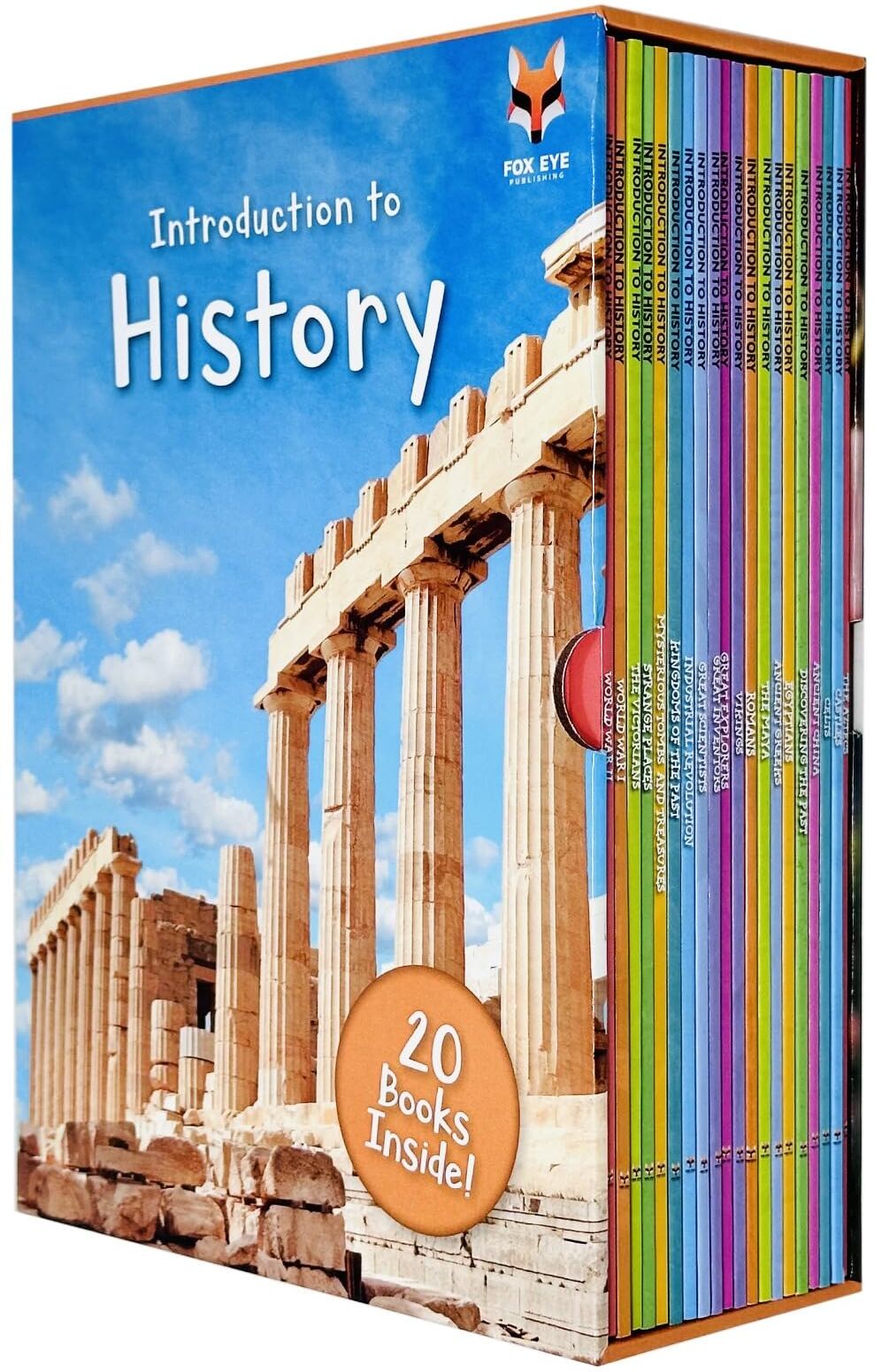
Fox Eye Publishing Introduction to History 20 Books Collection Box Set – Educational History Learning CollectionIntroduction to History 20 Books Collection Box Set (The Aztecs, Castles, Celts, Ancient China, Discovering the Past, Egyptians, Ancient Greeks, The Maya, Romans, Vikings, Great Explorers and More) Books in This Collection: Introduction to The Aztecs Introduction to Castles Introduction to Celts Introduction to Ancient China Introduction to Discovering the Past Introduction to Egyptians Introduction to Ancient Greeks Introduction to The Maya Introduction to Romans Introduction to Vikings Introduction to Great Explorers Introduction to Great Inventors Introduction to Great Scientists Introduction to Industrial Revolution Introduction to Kingdoms of the Past Introduction to Mysterious Tombs and Treasures Introduction to Strange Places Introduction to The Victorians Introduction to World War I Introduction to World War II12,99 £*Shipping: 2,99 £Secure redirect to the provider
-
What is the difference between density-independent factors and abiotic factors?
Density-independent factors are environmental factors that affect a population regardless of its size or density, such as natural disasters or climate change. Abiotic factors, on the other hand, are non-living components of an ecosystem that can influence the survival and growth of organisms, such as temperature, sunlight, and soil composition. While density-independent factors can include abiotic factors, abiotic factors encompass a broader range of non-living elements that can impact an ecosystem. **
-
What are original factors of production and derivative factors of production?
Original factors of production are the primary inputs required for the production process, including land, labor, capital, and entrepreneurship. These factors are essential for creating goods and services. Derivative factors of production are resources that are created or derived from the original factors, such as technology, knowledge, and skills. These derivative factors enhance the productivity and efficiency of the original factors in the production process. **
-
What factors stop growth?
Several factors can stop growth, including lack of access to resources such as education, healthcare, and economic opportunities. Inadequate nutrition and poor living conditions can also hinder physical growth and development. Additionally, environmental factors such as pollution and climate change can have negative effects on growth. Finally, social and political factors such as discrimination, conflict, and instability can create barriers to growth and development. **
-
What are linear factors?
Linear factors are expressions of the form (x - a), where "a" is a constant. They represent the factors of a polynomial that are of degree 1, meaning they are linear in nature. When a polynomial is factored into linear factors, it can help us understand the roots or zeros of the polynomial, which are the values of x that make the polynomial equal to zero. Linear factors play a crucial role in understanding the behavior and properties of polynomials. **
* All prices are inclusive of VAT and, if applicable, plus shipping costs. The offer information is based on the details provided by the respective shop and is updated through automated processes. Real-time updates do not occur, so deviations can occur in individual cases. ** Note: Parts of this content were created by AI.