Buy wetzlar.eu ?
We are moving the project
wetzlar.eu .
Are you interested in purchasing the domain
wetzlar.eu ?
domain@kv-gmbh.de · 0541-91531010
Buy wetzlar.eu ?
How can I determine if a function is the density of a random variable?
To determine if a function is the density of a random variable, you can check if the function satisfies the properties of a probability density function. These properties include being non-negative for all values, integrating to 1 over the entire range of possible values, and being continuous (or piecewise continuous) over its domain. Additionally, you can verify that the function is a valid probability density function by checking if it correctly describes the likelihood of the random variable taking on certain values. **
How was tourism managed until World War II?
Until World War II, tourism was managed through a combination of government regulations, private sector initiatives, and informal arrangements. Governments often played a role in promoting tourism through marketing campaigns and infrastructure development, while also imposing regulations to ensure the safety and quality of tourist experiences. Private sector businesses, such as hotels and tour operators, also played a significant role in managing tourism by providing services and accommodations for travelers. Additionally, informal arrangements, such as word-of-mouth recommendations and local community involvement, also influenced the management of tourism during this time. Overall, tourism management was a combination of public and private sector efforts, as well as informal practices, before World War II. **
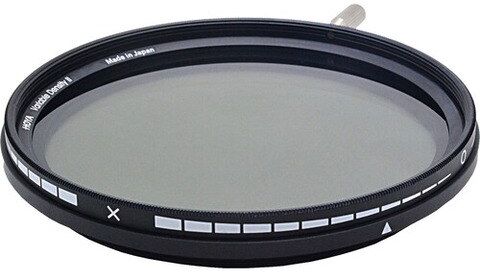

Similar search terms for Hoya-Variable-Density-II
Top-Angebote
Products related to Hoya-Variable-Density-II:
-
Hoya Variable Density II ND3-ND400 Filter 77mmThe Hoya Variable Density II is a 77mm screw-in variable neutral density filter. Rotating the outer ring sets the density anywhere from ND3 to ND400 (about 1.5 to 9 stops), so one filter replaces a set of fixed ND filters for long exposures, motion blur or shooting wide open in bright light.Compared with the original Variable Density filter, the Mark II frame is thinner to reduce vignetting on wide-angle lenses. The front of the frame is one size larger than the thread, so it takes a 82mm lens cap rather than a 77mm one. Turning the ring past either end of the range produces a cross-shaped (X) pattern.149,99 £*Shipping: 0,00 £Secure redirect to the provider
-
Hoya Variable Density II ND3-ND400 Filter 82mmThe Hoya Variable Density II is a 82mm screw-in variable neutral density filter. Rotating the outer ring sets the density anywhere from ND3 to ND400 (about 1.5 to 9 stops), so one filter replaces a set of fixed ND filters for long exposures, motion blur or shooting wide open in bright light.Compared with the original Variable Density filter, the Mark II frame is thinner to reduce vignetting on wide-angle lenses. The front of the frame is one size larger than the thread, so it takes a 86mm lens cap rather than a 82mm one. Turning the ring past either end of the range produces a cross-shaped (X) pattern.164,99 £*Shipping: 0,00 £Secure redirect to the provider
-
Hoya 55mm PROND EX 1000 Neutral Density 3.0 10-Stop FilterThe Hoya 55mm PROND EX 1000 is a screw-in neutral density filter with an optical density of 3.0, cutting the light reaching the sensor by 10 stops (1/1000). It lets photographers use long exposures to smooth water and blur moving clouds or crowds in daylight, and lets filmmakers keep a shutter speed that matches their frame rate, or shoot at a wide aperture for shallow depth of field, in bright light. Hoya's ACCU-ND metallic coating is designed to give a neutral colour balance, avoiding the colour cast that cheaper ND filters can produce, including in the infrared part of the spectrum. Fits lenses with a 55mm filter thread.60,49 £*Shipping: 0,00 £Secure redirect to the provider
-
Hoya 77mm PROND EX 1000 Neutral Density 3.0 10-Stop FilterThe Hoya 77mm PROND EX 1000 is a screw-in neutral density filter with an optical density of 3.0, cutting the light reaching the sensor by 10 stops (1/1000). It lets photographers use long exposures to smooth water and blur moving clouds or crowds in daylight, and lets filmmakers keep a shutter speed that matches their frame rate, or shoot at a wide aperture for shallow depth of field, in bright light. Hoya's ACCU-ND metallic coating is designed to give a neutral colour balance, avoiding the colour cast that cheaper ND filters can produce, including in the infrared part of the spectrum. Fits lenses with a 77mm filter thread.98,99 £*Shipping: 0,00 £Secure redirect to the provider


-
Which polarizing filter and neutral density filter do you recommend for architectural photography?
For architectural photography, I recommend a circular polarizing filter to reduce glare and reflections on glass and water surfaces, as well as to enhance the contrast and saturation of the sky and building exteriors. As for neutral density filters, I suggest a 3-stop or 6-stop ND filter to control the amount of light entering the camera, allowing for longer exposures to capture movement in the scene or to achieve a shallower depth of field in bright lighting conditions. These filters can help improve the overall quality and impact of architectural photographs. **
-
Is the Pentax K-5 II a good camera for dog photography?
Yes, the Pentax K-5 II can be a good camera for dog photography. It offers a 16.3-megapixel sensor, which can capture high-quality images with good detail. Additionally, its weather-sealed body can be useful for outdoor dog photography sessions. The camera also has a fast autofocus system, which can help in capturing sharp images of moving dogs. **
-
Was Austrian culture suppressed during the German occupation in World War II?
Yes, Austrian culture was suppressed during the German occupation in World War II. The Nazis sought to integrate Austria into the Greater German Reich and imposed their own cultural and ideological values on the country. They banned and censored Austrian literature, music, and art that did not align with their vision of a unified German culture. Many Austrian artists, intellectuals, and cultural figures were persecuted, exiled, or killed for their resistance to Nazi cultural policies. Overall, the German occupation had a significant impact on Austrian culture, leading to a period of suppression and censorship. **
-
Looking for a fast lens for the Canon 7D Mark II, specifically for kindergarten photography.
For kindergarten photography with the Canon 7D Mark II, you may want to consider a fast prime lens like the Canon EF 50mm f/1.8 STM or the Canon EF 35mm f/2 IS USM. These lenses have wide apertures that allow for faster shutter speeds in low light situations and produce beautiful background blur to make your subjects stand out. Additionally, their compact size and lightweight design make them easy to handle when photographing active kindergarten children. **


"Looking for a high-aperture lens for the Canon 7D Mark II, specifically for kindergarten photography."
For kindergarten photography with the Canon 7D Mark II, you may want to consider a lens with a wide aperture to capture sharp images in low light and to create a shallow depth of field for beautiful portraits. The Canon EF 50mm f/1.8 STM lens is a popular choice for its wide aperture and affordability, making it a great option for kindergarten photography. Additionally, the Canon EF 85mm f/1.8 USM lens is another excellent choice for capturing stunning portraits with its wide aperture and telephoto focal length. Both of these lenses would be great options for kindergarten photography with the Canon 7D Mark II. **
Why does Germany not know so much about its own history in World War II?
Germany's lack of knowledge about its own history in World War II can be attributed to several factors. One reason is the collective guilt and shame felt by many Germans following the atrocities committed during the war, leading to a reluctance to confront and discuss this dark period in their history. Additionally, the post-war division of Germany into East and West resulted in differing narratives and interpretations of the war, further complicating the understanding of this complex history. Finally, the passage of time and generational changes have also contributed to a lack of awareness and knowledge about World War II among younger generations in Germany. **
Top-Angebote
Products related to Hoya-Variable-Density-II:
-
Hoya Variable Density II ND3-ND400 Filter 67mmThe Hoya Variable Density II is a 67mm screw-in variable neutral density filter. Rotating the outer ring sets the density anywhere from ND3 to ND400 (about 1.5 to 9 stops), so one filter replaces a set of fixed ND filters for long exposures, motion blur or shooting wide open in bright light.Compared with the original Variable Density filter, the Mark II frame is thinner to reduce vignetting on wide-angle lenses. The front of the frame is one size larger than the thread, so it takes a 72mm lens cap rather than a 67mm one. Turning the ring past either end of the range produces a cross-shaped (X) pattern.131,49 £*Shipping: 0,00 £Secure redirect to the provider
-
Hoya Variable Density II ND3-ND400 Filter 72mmThe Hoya Variable Density II is a 72mm screw-in variable neutral density filter. Rotating the outer ring sets the density anywhere from ND3 to ND400 (about 1.5 to 9 stops), so one filter replaces a set of fixed ND filters for long exposures, motion blur or shooting wide open in bright light.Compared with the original Variable Density filter, the Mark II frame is thinner to reduce vignetting on wide-angle lenses. The front of the frame is one size larger than the thread, so it takes a 77mm lens cap rather than a 72mm one. Turning the ring past either end of the range produces a cross-shaped (X) pattern.140,99 £*Shipping: 0,00 £Secure redirect to the provider
-
Hoya Variable Density II ND3-ND400 Filter 77mmThe Hoya Variable Density II is a 77mm screw-in variable neutral density filter. Rotating the outer ring sets the density anywhere from ND3 to ND400 (about 1.5 to 9 stops), so one filter replaces a set of fixed ND filters for long exposures, motion blur or shooting wide open in bright light.Compared with the original Variable Density filter, the Mark II frame is thinner to reduce vignetting on wide-angle lenses. The front of the frame is one size larger than the thread, so it takes a 82mm lens cap rather than a 77mm one. Turning the ring past either end of the range produces a cross-shaped (X) pattern.149,99 £*Shipping: 0,00 £Secure redirect to the provider
-
Hoya Variable Density II ND3-ND400 Filter 82mmThe Hoya Variable Density II is a 82mm screw-in variable neutral density filter. Rotating the outer ring sets the density anywhere from ND3 to ND400 (about 1.5 to 9 stops), so one filter replaces a set of fixed ND filters for long exposures, motion blur or shooting wide open in bright light.Compared with the original Variable Density filter, the Mark II frame is thinner to reduce vignetting on wide-angle lenses. The front of the frame is one size larger than the thread, so it takes a 86mm lens cap rather than a 82mm one. Turning the ring past either end of the range produces a cross-shaped (X) pattern.164,99 £*Shipping: 0,00 £Secure redirect to the provider
-
How can I determine if a function is the density of a random variable?
To determine if a function is the density of a random variable, you can check if the function satisfies the properties of a probability density function. These properties include being non-negative for all values, integrating to 1 over the entire range of possible values, and being continuous (or piecewise continuous) over its domain. Additionally, you can verify that the function is a valid probability density function by checking if it correctly describes the likelihood of the random variable taking on certain values. **
-
How was tourism managed until World War II?
Until World War II, tourism was managed through a combination of government regulations, private sector initiatives, and informal arrangements. Governments often played a role in promoting tourism through marketing campaigns and infrastructure development, while also imposing regulations to ensure the safety and quality of tourist experiences. Private sector businesses, such as hotels and tour operators, also played a significant role in managing tourism by providing services and accommodations for travelers. Additionally, informal arrangements, such as word-of-mouth recommendations and local community involvement, also influenced the management of tourism during this time. Overall, tourism management was a combination of public and private sector efforts, as well as informal practices, before World War II. **
-
Which polarizing filter and neutral density filter do you recommend for architectural photography?
For architectural photography, I recommend a circular polarizing filter to reduce glare and reflections on glass and water surfaces, as well as to enhance the contrast and saturation of the sky and building exteriors. As for neutral density filters, I suggest a 3-stop or 6-stop ND filter to control the amount of light entering the camera, allowing for longer exposures to capture movement in the scene or to achieve a shallower depth of field in bright lighting conditions. These filters can help improve the overall quality and impact of architectural photographs. **
-
Is the Pentax K-5 II a good camera for dog photography?
Yes, the Pentax K-5 II can be a good camera for dog photography. It offers a 16.3-megapixel sensor, which can capture high-quality images with good detail. Additionally, its weather-sealed body can be useful for outdoor dog photography sessions. The camera also has a fast autofocus system, which can help in capturing sharp images of moving dogs. **
Similar search terms for Hoya-Variable-Density-II
-
Hoya 55mm PROND EX 1000 Neutral Density 3.0 10-Stop FilterThe Hoya 55mm PROND EX 1000 is a screw-in neutral density filter with an optical density of 3.0, cutting the light reaching the sensor by 10 stops (1/1000). It lets photographers use long exposures to smooth water and blur moving clouds or crowds in daylight, and lets filmmakers keep a shutter speed that matches their frame rate, or shoot at a wide aperture for shallow depth of field, in bright light. Hoya's ACCU-ND metallic coating is designed to give a neutral colour balance, avoiding the colour cast that cheaper ND filters can produce, including in the infrared part of the spectrum. Fits lenses with a 55mm filter thread.60,49 £*Shipping: 0,00 £Secure redirect to the provider
-
Hoya 77mm PROND EX 1000 Neutral Density 3.0 10-Stop FilterThe Hoya 77mm PROND EX 1000 is a screw-in neutral density filter with an optical density of 3.0, cutting the light reaching the sensor by 10 stops (1/1000). It lets photographers use long exposures to smooth water and blur moving clouds or crowds in daylight, and lets filmmakers keep a shutter speed that matches their frame rate, or shoot at a wide aperture for shallow depth of field, in bright light. Hoya's ACCU-ND metallic coating is designed to give a neutral colour balance, avoiding the colour cast that cheaper ND filters can produce, including in the infrared part of the spectrum. Fits lenses with a 77mm filter thread.98,99 £*Shipping: 0,00 £Secure redirect to the provider
-
Hoya 62mm PROND EX Neutral Density Filter Kit (ND8, ND64, ND1000)Hoya PROND EX neutral density filter kit for 62mm lens threads. Contains three screw-in filters: PROND EX 8 (3-stop), PROND EX 64 (6-stop) and PROND EX 1000 (10-stop), using Hoya's ACCU-ND coating for a neutral colour balance at every density.161,49 £*Shipping: 0,00 £Secure redirect to the provider
-
Hoya 77mm PROND EX Neutral Density Filter Kit (ND8, ND64, ND1000)Hoya PROND EX neutral density filter kit for 77mm lens threads. Contains three screw-in filters: PROND EX 8 (3-stop), PROND EX 64 (6-stop) and PROND EX 1000 (10-stop), using Hoya's ACCU-ND coating for a neutral colour balance at every density.234,99 £*Shipping: 0,00 £Secure redirect to the provider
-
Was Austrian culture suppressed during the German occupation in World War II?
Yes, Austrian culture was suppressed during the German occupation in World War II. The Nazis sought to integrate Austria into the Greater German Reich and imposed their own cultural and ideological values on the country. They banned and censored Austrian literature, music, and art that did not align with their vision of a unified German culture. Many Austrian artists, intellectuals, and cultural figures were persecuted, exiled, or killed for their resistance to Nazi cultural policies. Overall, the German occupation had a significant impact on Austrian culture, leading to a period of suppression and censorship. **
-
Looking for a fast lens for the Canon 7D Mark II, specifically for kindergarten photography.
For kindergarten photography with the Canon 7D Mark II, you may want to consider a fast prime lens like the Canon EF 50mm f/1.8 STM or the Canon EF 35mm f/2 IS USM. These lenses have wide apertures that allow for faster shutter speeds in low light situations and produce beautiful background blur to make your subjects stand out. Additionally, their compact size and lightweight design make them easy to handle when photographing active kindergarten children. **
-
"Looking for a high-aperture lens for the Canon 7D Mark II, specifically for kindergarten photography."
For kindergarten photography with the Canon 7D Mark II, you may want to consider a lens with a wide aperture to capture sharp images in low light and to create a shallow depth of field for beautiful portraits. The Canon EF 50mm f/1.8 STM lens is a popular choice for its wide aperture and affordability, making it a great option for kindergarten photography. Additionally, the Canon EF 85mm f/1.8 USM lens is another excellent choice for capturing stunning portraits with its wide aperture and telephoto focal length. Both of these lenses would be great options for kindergarten photography with the Canon 7D Mark II. **
-
Why does Germany not know so much about its own history in World War II?
Germany's lack of knowledge about its own history in World War II can be attributed to several factors. One reason is the collective guilt and shame felt by many Germans following the atrocities committed during the war, leading to a reluctance to confront and discuss this dark period in their history. Additionally, the post-war division of Germany into East and West resulted in differing narratives and interpretations of the war, further complicating the understanding of this complex history. Finally, the passage of time and generational changes have also contributed to a lack of awareness and knowledge about World War II among younger generations in Germany. **
* All prices are inclusive of VAT and, if applicable, plus shipping costs. The offer information is based on the details provided by the respective shop and is updated through automated processes. Real-time updates do not occur, so deviations can occur in individual cases. ** Note: Parts of this content were created by AI.